


How Does a Truck Accident Claim Differ From a Car Accident Claim in North Carolina?
- More companies may share fault: the driver, the motor carrier, a freight broker, a shipper, a maintenance contractor, or a parts maker.
- Federal FMCSA safety rules apply on top of North Carolina traffic law.
- Key evidence sits with the trucking company, and some of it has a short retention period.
- Insurance minimums start at $750,000 for most for-hire interstate carriers, compared with $50,000 per person for a North Carolina car policy.
A truck accident vs. car accident claim in North Carolina differs in who may be liable, which safety rules apply, where the evidence is, and how much insurance stands behind the defendant. Those differences start mattering in the first days after the crash.
Most people hit by a delivery truck or tractor-trailer assume they have an ordinary car accident claim with bigger bills. That assumption often leaves the trucking company, its broker, and its safety records out of the picture.
If a commercial vehicle hit you in Forsyth County, our Winston-Salem trucking accident attorney page covers how we handle those cases.
Key Takeaways for Truck Accident vs. Car Accident Claims in North Carolina
- Interstate trucking companies must follow the Federal Motor Carrier Safety Regulations, which set hours-of-service, maintenance, and driver qualification rules that do not apply to ordinary drivers.
- Most for-hire interstate carriers of general freight must carry at least $750,000 in liability insurance, while a North Carolina car policy issued or renewed on or after July 1, 2025 must carry at least $50,000 per person.
- Motor carriers must keep drivers’ hours-of-service records and supporting documents for six months.
- In May 2026, the U.S. Supreme Court held that federal law does not preempt state negligent-hiring claims against freight brokers.
- North Carolina’s contributory negligence rule applies to truck and car claims alike, so any fault by the injured person may bar recovery.
Truck Accident vs. Car Accident Claims at a Glance
The biggest differences show up in five places: the rules, the records, the vehicle data, the defendants, and the insurance.
| Issue | Car Accident Claim | Truck Accident Claim |
| Safety rules | North Carolina traffic law | North Carolina traffic law plus federal FMCSA rules |
| Driver records | Driving record and license | Hours-of-service logs, qualification file, drug and alcohol testing |
| Vehicle data | Limited crash data in some cars | Engine control module, electronic logging device, fleet telematics |
| Liable parties | Usually the other driver | Driver, carrier, broker, shipper, maintenance contractor, manufacturer |
| Minimum insurance | $50,000 per person (NC, policies issued or renewed on or after July 1, 2025) | $750,000 for most for-hire interstate general freight |
For a collision between two passenger vehicles, see how we approach a standard car accident claim.
Was the Vehicle That Hit You a Commercial Truck?
The vehicle does not have to be an 18-wheeler for trucking rules to matter. Federal insurance minimums under 49 CFR 387.9 reach for-hire interstate vehicles rated at 10,001 pounds or more, which includes many box trucks and larger delivery vehicles.
Signs You Are Dealing With a Commercial Vehicle
A few details at the scene or in the crash report often point to a commercial claim:
- A company name or USDOT number on the truck’s door
- A crash report that lists a motor carrier, not just an individual owner
- A driver who was making deliveries or hauling a load at the time
- A trailer, a box body, or cargo that belongs to someone other than the driver
If any of these apply, the claim may involve more companies and more coverage than a typical car crash.
Why the Sorting Question Matters Early
A claim handled as an ordinary car accident may never trigger a request for the truck’s data or logs. By the time anyone asks, some of those records may be gone.
Who May Be Liable in a Truck Accident That Would Not Be in a Car Accident?
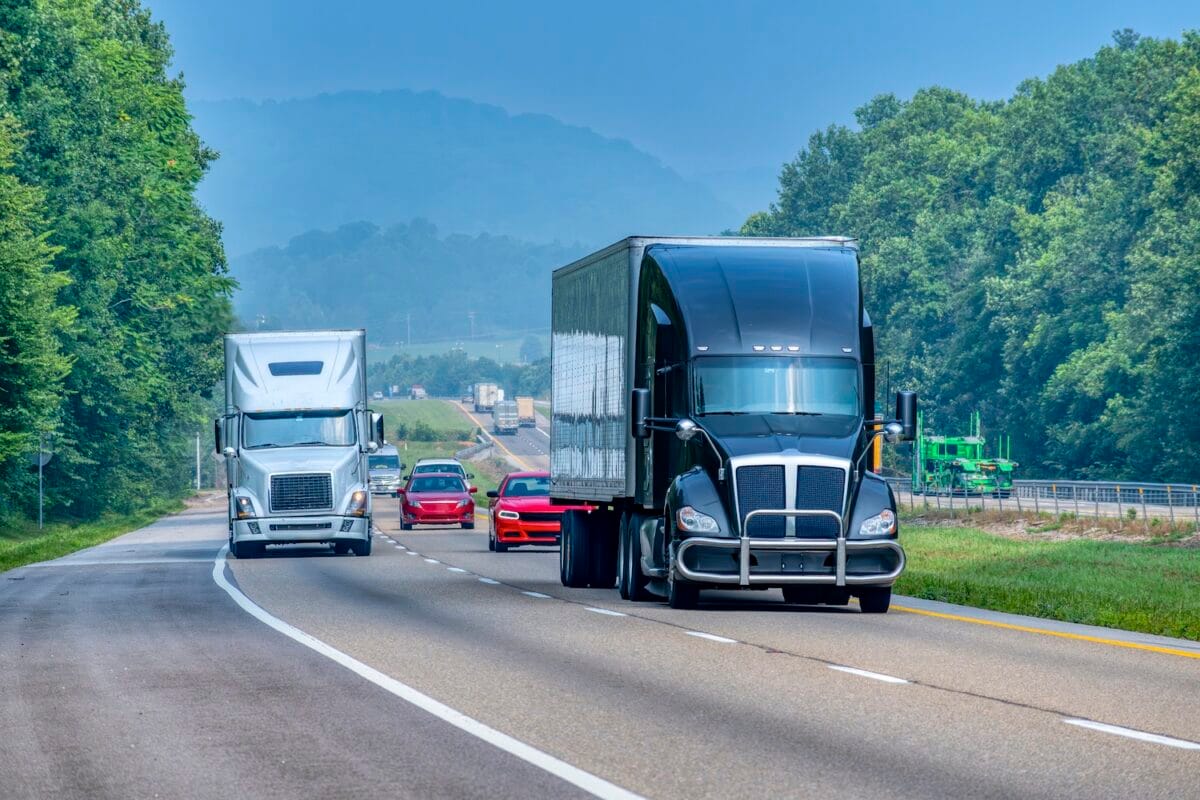
Trucking company liability in North Carolina often reaches past the driver. A truck claim may involve the motor carrier, a freight broker, a shipper or loader, a maintenance contractor, or a manufacturer, and each may carry its own insurance.
The Driver and the Motor Carrier
A motor carrier is generally responsible for its driver’s negligence on the job. It may also face direct claims for negligent hiring, training, or supervision, or for pressuring a driver to break hours-of-service limits.
Freight Brokers After Montgomery v. Caribe Transport II
In May 2026, the U.S. Supreme Court held unanimously in Montgomery v. Caribe Transport II that federal law does not preempt state negligent-hiring claims against freight brokers. A broker that selects an unsafe carrier may now face a negligent-selection claim under state law.
No equivalent party exists in most car accidents, which is one reason truck claims involve more investigation.
Shippers, Maintenance Contractors, and Manufacturers
Cargo that was loaded or secured badly may shift and cause a rollover. A repair shop that missed a defect, or a manufacturer that sold a faulty part, may also share fault. Our guide to brake failure and maintenance liability covers how those claims develop.
Which FMCSA Rules Shape a Truck Accident Claim?
The Federal Motor Carrier Safety Administration sets safety rules for interstate trucking, and a violation may serve as evidence of carelessness. No comparable federal rulebook governs an ordinary driver’s commute.
Hours of Service
Under 49 CFR 395.3, a property-carrying driver may drive no more than 11 hours within a 14-hour window, and only after 10 consecutive hours off duty. A 30-minute break is required after 8 hours of driving.
Drivers also may not drive after 60 hours on duty in 7 days, or 70 hours in 8 days, depending on whether the carrier operates every day. Fatigue claims often turn on these weekly limits.
Driver Qualification and Phone Rules
FMCSA rules require carriers to confirm each driver holds the right commercial license and meets medical and drug-testing standards. Truck drivers are also barred from texting or holding a phone while driving under 49 CFR Part 392, Subpart H.
Evidence That Disappears Fast in a Truck Case
In a car crash, the key evidence is often photos, witnesses, and the police report. In a truck crash, much of it sits in the trucking company’s systems, and motor carriers must keep hours-of-service records and supporting documents for only six months.
The evidence most at risk includes:
- Engine control module data: speed, braking, and throttle in the moments before impact
- Electronic logging device records: the driver’s duty status and hours
- Dashcam video: forward-facing and in-cab footage
- Telematics and fleet messaging: GPS location history and dispatch messages to the driver
How a Spoliation Letter Preserves It
A spoliation letter, also called a preservation letter, puts the carrier on notice to keep the truck, its data, and its records. Under North Carolina’s pattern jury instruction on spoliation, a jury may infer that lost evidence was damaging to the party that had it, even without proof of bad faith.
Why the Investigation Starts in Days, Not Weeks
A truck may return to service within days, and its onboard data may be overwritten as it runs. The carrier’s insurer often begins its own investigation right away. Sending a preservation letter early gives the evidence a stronger chance of surviving.
Why Are Truck Accident Settlements Often Larger?
No two claims are alike, and no outcome is assured. Truck claims often carry higher value for three reasons: higher insurance limits, more defendants, and more serious injuries from the size of the vehicle.
Higher Policy Limits
Most for-hire interstate trucks hauling general freight must carry at least $750,000 in coverage, and certain hazardous loads require $1 million to $5 million, under 49 CFR 387.9.
By contrast, a North Carolina car policy issued or renewed on or after July 1, 2025 must carry at least $50,000 per person, according to the NC Department of Insurance. In a serious car crash, the at-fault driver’s limits often run out first.
More Defendants, More Coverage
When a carrier, a broker, and a maintenance contractor all share fault, each may bring its own policy. That changes settlement dynamics, because more coverage is available and each insurer has its own reasons to resolve its share.
Crash Types That Point to Trucking-Specific Fault
Some crash patterns rarely happen between two cars. They often point to a trucking rule or a trucking company decision:
- Jackknife crashes: hard braking, speed, or an unbalanced load
- Underride crashes: a car sliding under a trailer, raising questions about rear guards and lighting
- Rollovers: speed on ramps, or cargo that shifted
- Wide-turn crashes: a trailer cutting across lanes during a turn
Steps to Consider After a Crash With a Commercial Vehicle
A crash with a commercial truck benefits from a few early steps that a typical fender-bender does not require. Many people find it helpful to consider:
- Noting the company name and USDOT number on the truck, or photographing the door
- Requesting the crash report and checking which carrier it lists
- Keeping a record of any call from the trucking company’s insurer
- Asking a lawyer about a preservation letter before the six-month record window closes
These steps keep the claim from being handled as an ordinary car accident by default.
Truck Accident vs. Car Accident Claim Questions Answered by Our Winston-Salem and Greensboro Attorneys
Does North Carolina’s contributory negligence rule apply to truck accidents?
Yes. North Carolina’s contributory negligence rule applies to truck and car claims alike, so any fault by the injured person may bar recovery. In a truck case, engine data and dashcam video often become the most direct answer to a fault argument.
How long do I have to file a truck accident lawsuit in North Carolina?
Most personal injury lawsuits must be filed within three years under G.S. 1-52, the same as for a car accident. The practical deadline in a truck case is shorter, because the carrier’s six-month record retention period ends long before the lawsuit deadline.
Is a rented moving truck a commercial vehicle claim?
Usually not in the trucking sense. When a private person rents a moving truck for a personal move, the claim generally looks more like a car accident claim against that driver. The answer changes if a business was using the truck to move goods for pay.
Sorting Out What Kind of Claim You Have

The hardest part of a truck claim is often realizing it is one. A delivery van, a box truck, or a tractor-trailer may each bring a carrier, a broker, and a federal rulebook into what looked like a simple collision.
Whether you need a Winston-Salem trucking accident attorney after a crash on I-40 or a Greensboro truck accident lawyer after a collision in Guilford County, the first step is the same. Call Lewis & Keller Injury Lawyers at 336-933-9566 or contact us online to talk through what happened.
