

The Short Answer
The truck driver, trucking company, or another negligent party can be liable for a jackknife truck accident. Liability depends on what caused the truck to jackknife, such as speeding, improper braking, poor maintenance, or unsecured cargo.
If you or a loved one were involved in a jackknife accident, you may be wondering:
- Who is responsible for the crash?
- Do I have a case for compensation?
- How can I prove negligence in a jackknife accident?
Understanding the causes of jackknife accidents and who may be held liable is the first step in protecting your rights. Understanding the causes of jackknifing and who may be held liable is the first step in protecting your rights.
A North Carolina truck accident attorney can investigate the crash, identify responsible parties, and help you pursue compensation.
Key Takeaways: Jackknife Liability
- Jackknife truck accidents can be caused by several factors, including driver error, road conditions, and mechanical failure.
- Liability in a jackknife accident often depends on the cause, and multiple parties may be held responsible, such as the driver, trucking company, cargo loaders, and even government entities.
- After a jackknife crash, you can support and protect your case by gathering essential evidence like police reports, witness statements, maintenance logs, and dashcam footage.
- North Carolina’s contributory negligence law may stop you from pursuing compensation if you are found even 1% at fault in the accident.
- Working with a truck accident lawyer can improve your chances of securing compensation for medical bills, lost wages, pain and suffering, and property damage.
Common Causes of Jackknifing & Who May Be Liable
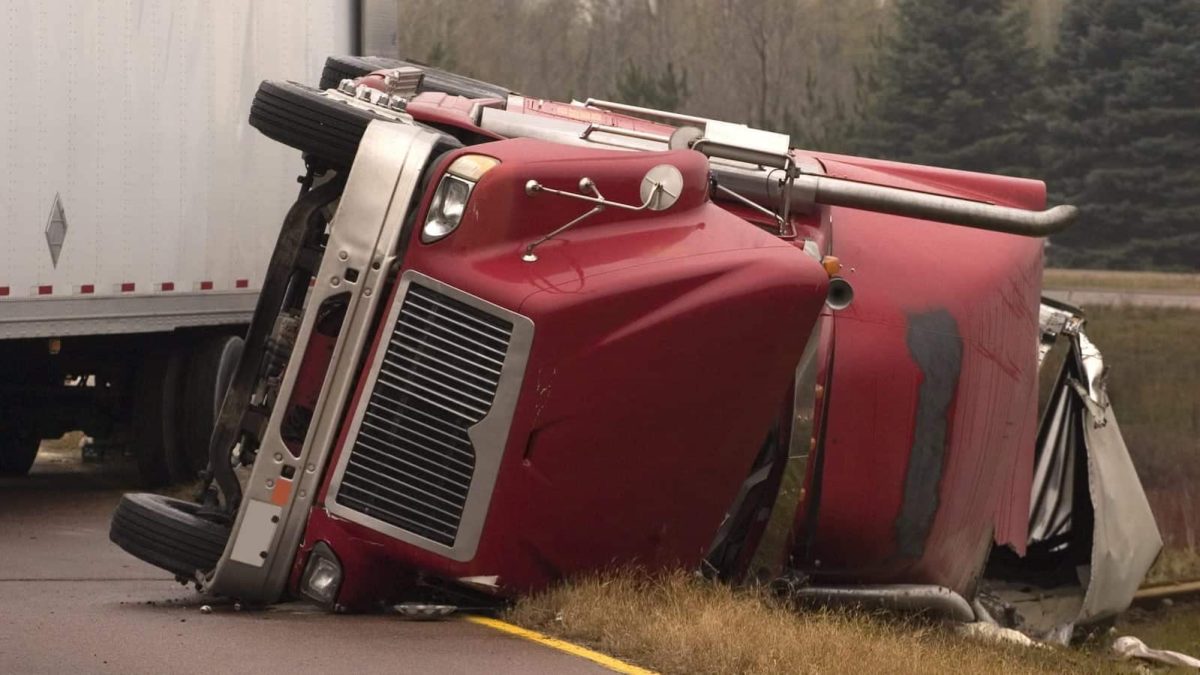
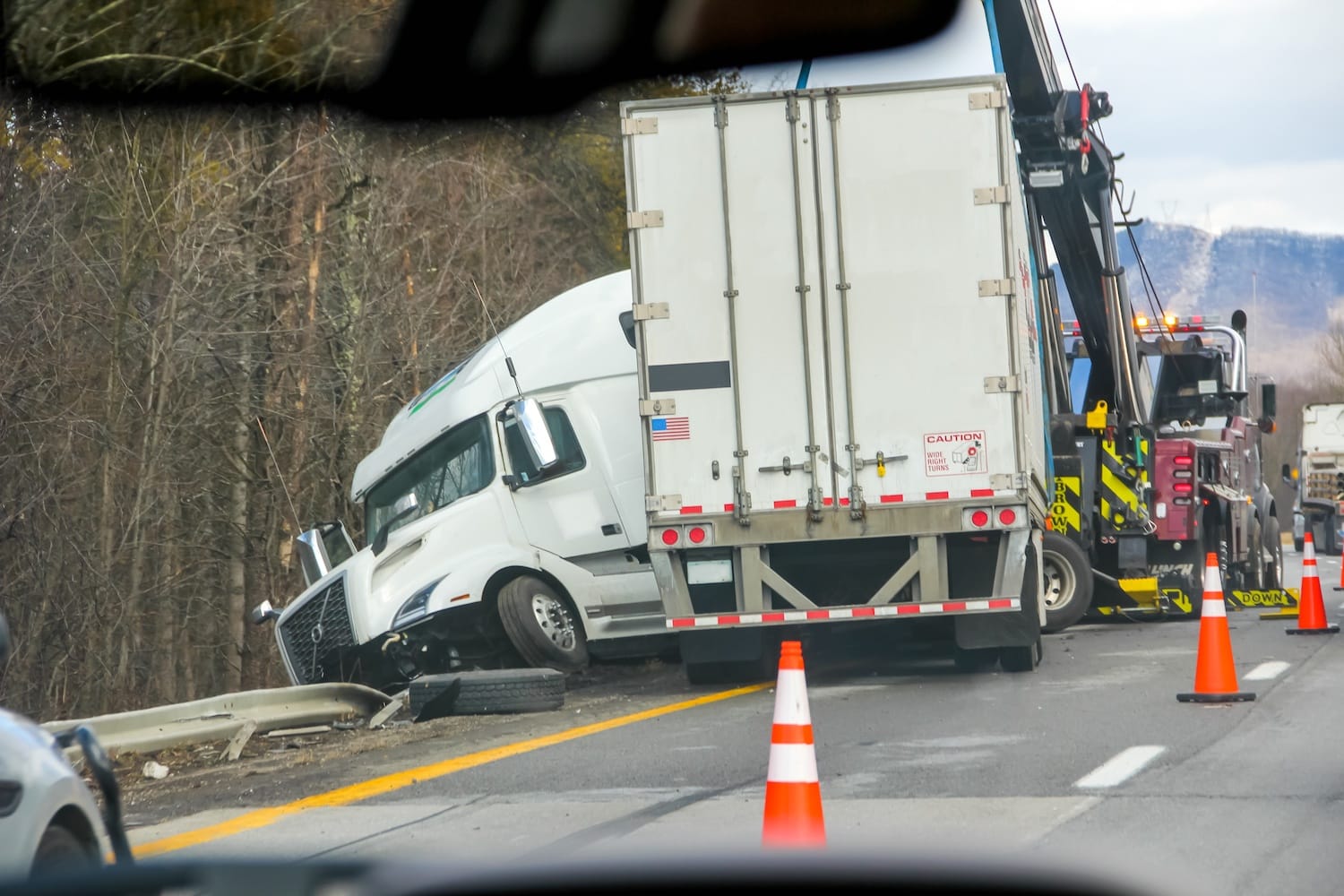
The truck driver or trucking company is often liable for a jackknife accident, but other parties may share responsibility. Jackknifing happens when a truck’s trailer swings out of control, forming a sharp V-shape with the cab.
These accidents are often caused by a combination of driver error, road conditions, and mechanical failures. Understanding the cause of the accident is central to a claim because it determines who may be held legally responsible.
| Cause of Jackknife Accident | Potentially Liable Party |
| Sudden or hard braking: If a truck driver slams the brakes too hard, especially on slippery roads, the trailer can lose traction, go into a skid, and swing out of control. | Truck driver, trucking company (if improper training contributed) |
| Speeding and reckless driving: A truck traveling too fast may not be able to stop in time, increasing the risk of skidding. | Truck driver |
| Poor truck maintenance: Worn brakes, bad tires, or faulty anti-lock braking systems (ABS) can make it easier for a truck to jackknife. | Trucking company, maintenance provider |
| Improperly loaded cargo: If the trailer is overloaded or unbalanced, it can make jackknifing more likely when braking or turning. | Cargo loading company, trucking company |
| Hazardous road conditions: Slippery roads, sharp curves, or poorly marked construction zones can increase the risk of skidding and jackknifing. | Local government or road maintenance authorities (if road design or maintenance played a role) |
Can Multiple Parties Share Liability?
More than one party can be responsible for a jackknife accident when several failures contribute to the crash. A trucking company may be liable for poor driver training or unsafe delivery schedules, while a maintenance contractor may share responsibility for faulty brake repairs. Investigating brake failure liability can help establish whether improper maintenance contributed to the accident.
Cargo loaders and shippers may also be responsible when uneven weight distribution or unsecured freight causes the trailer to lose stability. Claims involving improperly loaded and overloaded trucks often require loading records and weight tickets. If a defective brake component or anti-lock braking system caused the loss of control, the manufacturer may also face liability.
An experienced truck accident lawyer can investigate these factors, gather evidence, and determine who may be held responsible for your injuries.
What to Do After a Jackknife Truck Accident
Taking the right steps after a jackknife accident, like getting immediate medical care, can protect your health, legal rights, and ability to seek compensation. Here’s what you can do to protect your truck accident claim:
- Get medical care: See a doctor if you haven’t already, even if your injuries seem minor. Some symptoms take time to appear.
- Keep your records: Save medical bills, treatment records, repair estimates, and other documents related to the crash.
- Document your losses: Track missed work, medical expenses, and how your injuries affect your daily life.
- Be careful with insurers: Avoid admitting fault or giving the trucking company’s insurer a recorded statement before speaking with a lawyer.
- Contact a truck accident lawyer: An attorney can investigate the crash, obtain trucking company records, and help protect your right to compensation.
How to Prove Liability in a Jackknife Truck Accident
To receive compensation for your injuries, you must prove that someone else’s negligence caused the accident. This requires solid evidence and a strong legal strategy. Here’s what goes into proving fault in a jackknife truck accident:
1. Police Reports & Accident Documentation
After a truck accident, law enforcement will typically investigate the scene and file an official report. These reports may note whether the truck driver was speeding, braking improperly, or violating traffic laws—all of which can help prove liability.
Witness statements from other drivers, pedestrians, or passengers can provide additional perspectives on what happened.
2. Trucking Company Records
If the trucking company failed to maintain the vehicle, keep proper driver logs, or follow federal regulations from the Federal Motor Carrier Safety Administration (FMCSA), they could be held responsible.
Your legal team can request driver logs, maintenance records, and black box data (which can record speed and braking), as well as electronic logging device records that track driving hours.
Records That Can Reveal Why the Truck Jackknifed
Several records can help establish whether driver error, mechanical failure, or improper loading caused the accident.
Important evidence includes:
- ECM and telematics data: The truck’s electronic systems may record speed, braking, throttle activity, and fault codes before the crash.
- Brake maintenance records: Inspection and repair records can reveal worn components, brake imbalance, or missed repairs.
- Driver logs: Electronic logging device records can show driving hours and possible violations of FMCSA rules.
- Cargo records: Bills of lading, weight tickets, and loading documents can help identify who loaded the trailer and whether the load was properly distributed.
Since some electronic data can be overwritten and records may be lost, a truck accident lawyer can send a spoliation letter demanding that the carrier preserve relevant evidence. This can be especially important when several companies may share responsibility.
3. Video Footage & Photographic Evidence
Dashcam footage, surveillance cameras, and traffic cameras may have captured the accident. Photos of skid marks, vehicle damage, and road conditions can help reconstruct how the accident happened.
4. Expert Testimony & Accident Reconstruction
Accident reconstruction specialists can analyze evidence to determine how and why the jackknife occurred. If mechanical failure played a role, engineers or trucking experts can testify about whether the trucking company or maintenance provider was negligent.
Why Proving Negligence Matters To Your Case
Insurance companies often try to shift blame onto the victim to minimize payouts. The stronger your evidence, the harder it is for them to deny your claim. Unlike other states, North Carolina uses the doctrine of pure contributory negligence, which is among the strictest in the United States.
Under this rule, if you–the plaintiff–are found even 1% at fault for the accident, you’ll likely be barred from seeking compensation.
In jackknife cases, insurers may argue that you were following too closely, driving too fast, or had enough time to avoid the swinging trailer. Truck data, skid marks, and roadway measurements can help establish whether those arguments are supported by the evidence.
A North Carolina truck accident lawyer can help gather the right evidence, negotiate with insurers, and fight for the maximum compensation you deserve.
What Compensation Can You Recover After a Jackknife Truck Accident?
If you were injured in a jackknife accident, you may be able to recover compensation for your losses, such as medical bills and lost earnings. A jackknife accident settlement depends on the injuries, available insurance coverage, evidence of fault, and other losses.
Examples include:
- Medical expenses: Covers hospital visits, surgeries, medications, and ongoing treatment.
- Lost wages: Compensation for missed work and any long-term impact on your ability to earn.
- Pain and suffering: Includes physical pain, emotional distress, and reduced quality of life.
- Property damage: Covers vehicle repairs or replacement costs.
- Wrongful death damages: If a loved one was lost, compensation may include funeral costs and loss of financial support.
When Do You Need a Truck Accident Lawyer in North Carolina?
If you’ve been injured in a jackknife accident, speak with a North Carolina crash lawyer as soon as possible. Of course, you want to make sure that you’re safe and seek medical care first, but the sooner you get a lawyer involved, the better your chances for compensation will be.
A lawyer can help you understand your options, gather evidence, and fight for the compensation you may deserve.
Contact a truck accident lawyer if:
- You suffered serious injuries: Medical bills, lost income, and long-term care costs can add up quickly. A lawyer can help you seek full compensation.
- A loved one was killed in the accident: If a jackknife crash resulted in a wrongful death, an attorney can help your family pursue justice and financial support.
- The insurance company is offering a low settlement: Insurers often try to minimize payouts. A lawyer can negotiate on your behalf and take legal action if necessary.
- Liability is unclear, or multiple parties are involved: If more than one party may be responsible, an attorney can investigate and build a strong case.
- You’re an injured truck driver unsure of your rights: A lawyer can help you determine if you should file a workers’ compensation claim, a personal injury lawsuit, or both.
How a Lawyer Can Maximize Your Compensation
Insurance companies often try to settle for less than you may deserve, whether you’re a truck driver or another accident victim.
A truck accident attorney can:
- Calculate the true value of your claim, including medical costs, lost wages, and long-term damages.
- Investigate who is at fault, whether it’s another driver, a trucking company, or a third-party maintenance provider.
- Negotiate aggressively with insurers to secure the maximum compensation.
- Help injured truck drivers explore workers’ compensation claims or lawsuits against negligent third parties.
FAQs: Jackknife Truck Accidents
What causes a truck to jackknife?
A truck can jackknife when the tractor or trailer loses traction and swings out of alignment. Common causes include hard braking, slippery roads, excessive speed, and uneven cargo loads. Mechanical problems can also contribute to a jackknife accident.
Is the truck driver always at fault in a jackknife accident?
The truck driver is not always at fault for a jackknife accident. Poor maintenance, improperly loaded cargo, or defective equipment may place responsibility on the trucking company, maintenance contractor, cargo loader, or manufacturer.
What is trailer swing liability?
Trailer swing liability concerns who is responsible when a truck’s trailer swings into another lane or vehicle. Liability depends on what caused the trailer to lose control, including driver actions, mechanical problems, or cargo loading failures.
What evidence matters most in a jackknife case?
Truck electronic data, brake inspection records, driver logs, and cargo documents can help determine the cause of a jackknife accident. Your lawyer can request these records and take steps to preserve evidence before it is lost or overwritten.
Can I still recover if the insurer says I was following too closely?
You may still recover compensation if the evidence does not support the insurer’s claim that your driving contributed to the accident. North Carolina’s contributory negligence rule makes these disputes especially important because negligence that contributes to the crash can prevent recovery.
Talk to a North Carolina Truck Accident Lawyer from Lewis & Keller Injury Lawyers

A jackknife accident can change your life in an instant, leaving you with serious injuries, financial stress, and unanswered legal questions. Lewis & Keller Injury Lawyers is ready to fight for you.
If you or someone you love was injured in a trucking accident, don’t face the legal process alone. Our team of experienced truck accident lawyers will review your case for free and help you seek the compensation you may deserve.
Whether you need a Winston-Salem trucking accident attorney or a Greensboro truck accident lawyer, our team can investigate the crash, identify responsible parties, and help you understand your legal options.
