


Why Do Social Security Disability Claims Get Denied in North Carolina?
- Medical records that don’t show how your condition limits your ability to work
- Earnings above the 2026 substantial gainful activity limit of $1,690 a month for non-blind individuals
- Not following prescribed treatment without a good reason
- Missing a consultative exam, form, or deadline
- A condition that isn’t expected to last 12 months or isn’t severe enough
Why was your disability claim denied? For many people in North Carolina, the answer is not that the claim lacked merit.
Social Security Disability claims often get denied because the medical records did not prove what the Social Security Administration (SSA) needed to see, because earnings were too high, or because a form, exam, or deadline slipped through the cracks. Many of those problems can be fixed.
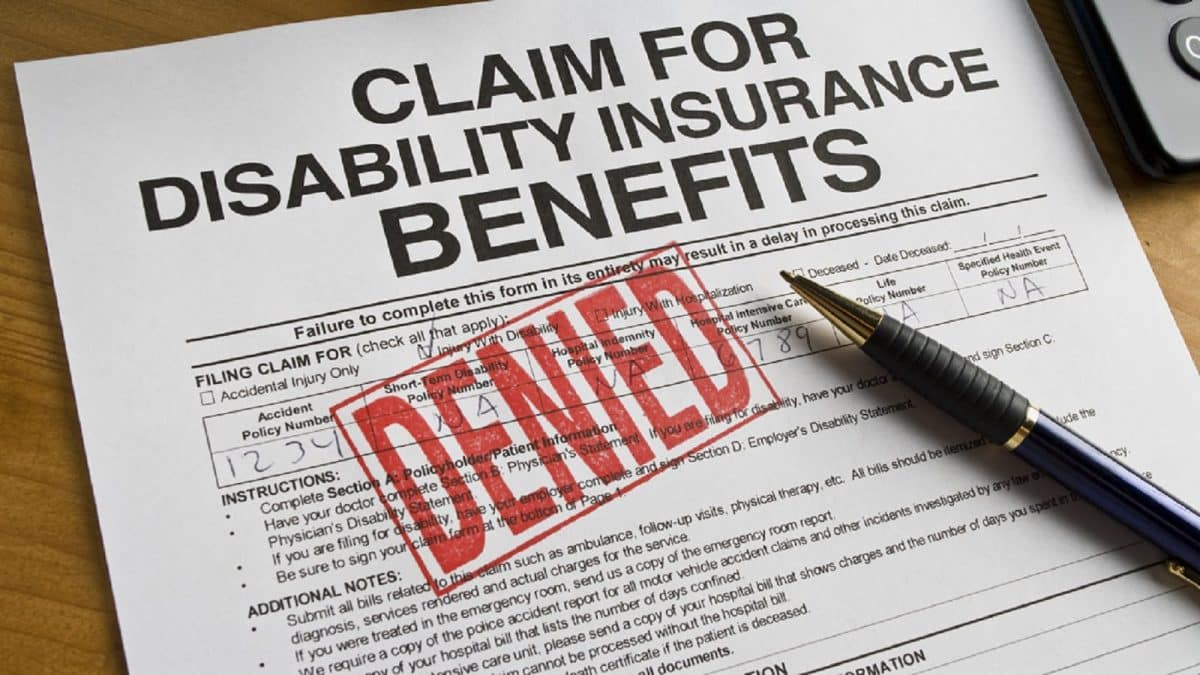
A denial letter is common, not a final verdict. SSA’s own data shows that only about one in five disabled-worker applicants is awarded benefits at the initial level, and some of the people turned down at first are approved later on appeal.
At Lewis & Keller Injury Lawyers, we talk with people across Greensboro and Winston-Salem who assumed a denial meant they were out of options. Usually, it meant their file was missing something.
Key Takeaways for Social Security Disability Denials in North Carolina
- A first denial is common: only about one in five disabled-worker applicants is awarded benefits at the initial level.
- North Carolina Disability Determination Services makes the first medical decision under federal SSA rules, based only on what is in your file.
- Medical records that don’t describe how your condition limits your ability to work are one of the most common reasons claims are denied.
- Earnings above the 2026 substantial gainful activity limit of $1,690 a month for non-blind individuals can lead to a denial before your medical records are reviewed.
- Missing a consultative exam, not following prescribed treatment without a good reason, or a condition not expected to last 12 months can also end a claim.
- You generally have 60 days from receiving a denial notice to appeal, and appealing keeps your original application date.
Who Decides Your Claim in North Carolina
You apply through SSA, but a state agency makes the first medical decision. In North Carolina, that agency is Disability Determination Services (DDS), a division of the NC Department of Health and Human Services based in Raleigh and funded mainly by SSA.
DDS applies federal SSA rules, not a separate North Carolina standard. A disability examiner and a medical or psychological consultant review your file together.
DDS requests records from your own doctors first. If those records are missing or too thin to support a decision, DDS can schedule a consultative examination with a doctor DDS arranges.
That matters because DDS decides on paper. The examiners never meet you, so a limitation that is not written down in your file effectively does not exist.
1. Insufficient or Non-Specific Medical Evidence
Insufficient medical evidence is one of the most common reasons Social Security Disability claims are denied. It rarely means you had no records. It usually means your records did not show how your condition limits your ability to work.
Under SSA rules, your impairment must be established by objective medical evidence from an acceptable medical source, such as exam findings, imaging, or lab results. Your own description of symptoms, or a diagnosis alone, is not enough to establish the impairment.
Here is where many North Carolina claimants get caught. You may see your doctor every month for years, but the notes might say little more than “back pain, stable, refill medication.” That documents treatment. It does not document function.
DDS uses your records to estimate your residual functional capacity, which SSA defines as the most you can still do despite your limitations. That assessment looks at specifics:
- How long you can sit, stand, and walk
- How much you can lift and carry, and how often
- Whether you can reach, handle objects, bend, or stoop
- Whether you can follow instructions, stay on task, and handle normal work pressure
If your chart is silent on those questions, the examiner has little to weigh against a finding that you can still work. Records that describe measurable limits, like how far you can walk before stopping or how often symptoms interrupt your day, fill that gap.
Tell your providers exactly how your condition affects daily tasks, and ask whether they will describe your limitations in writing.
2. Earnings Above the Substantial Gainful Activity Limit
SSA generally will not find you disabled if you are working and your earnings are above a set monthly amount called substantial gainful activity (SGA). For 2026, the SGA amount is $1,690 per month for non-blind individuals and $2,830 per month for individuals who are blind. SSA adjusts these figures each year.
This denial can happen before anyone reviews your medical records. It often catches people who kept working part-time out of necessity. SGA looks at earnings from work, not unearned income like a pension.
SSDI and SSI also carry separate non-medical requirements. SSDI generally requires enough work credits from recent years. SSI is need-based and has income and resource limits.
A denial on one of these grounds is often called a technical denial, and it is a different problem from a medical denial.
3. Not Following Prescribed Treatment
SSA expects you to follow treatment that your doctor prescribes and that is expected to restore your ability to work. Under the federal regulation on prescribed treatment, failing to follow it without a good reason can lead to a denial.
This rule is narrower than many people think. Under Social Security Ruling 18-3p, SSA only applies it after finding you would otherwise qualify.
The ruling also lists acceptable reasons for not following treatment. Being unable to afford care when free or low-cost community resources are unavailable is one of them. Others include religious objections, a prior surgery for the same condition that failed, and a treatment that carries a high risk.
In practice, gaps in care cause more trouble. If you stopped seeing a specialist after losing insurance, your file may go quiet for months, and DDS may read that silence as improvement. Documenting why treatment stopped helps keep a gap from being misread.
4. Missed Deadlines or Not Cooperating With DDS
Some claims are denied because the process stalled. DDS may send function reports and work history forms, each with a response window.
The consultative examination is a common trouble spot. Under SSA rules, if you do not attend a scheduled exam without a good reason, SSA may find that you are not disabled. Good reasons include being sick on the exam date, not receiving timely notice, or a death or serious illness in your immediate family.
More broadly, if you do not provide the evidence SSA requests, the agency will decide your claim based on whatever is already in the file. For many people, that means a denial. Keeping your contact information current with SSA and opening every letter promptly prevents many of these problems.
5. The Condition Is Not Expected to Last 12 Months or Is Not Severe Enough
Social Security Disability is not designed for short-term conditions. Your impairment must have lasted, or be expected to last, for at least 12 continuous months or be expected to result in death. It also must keep you from doing substantial gainful work.
Denials in this category usually take one of three forms. DDS may conclude that your condition should improve within a year, such as after surgery and rehabilitation.
It may decide your condition is real but not severe enough to limit basic work activities. Or it may find that you can still do your past work, or other work in the national economy when your age, education, and work experience are considered.
These are judgment calls. A surgeon’s note predicting recovery in six months can sink a claim, while a later record showing complications can change the picture.
The 5 Denial Reasons at a Glance
| Denial reason | What SSA looks at | What can help |
|---|---|---|
| Insufficient medical evidence | Objective medical evidence showing how your condition limits work | Records and provider opinions that describe measurable functional limits |
| Earnings above SGA | Work earnings above $1,690 a month (non-blind) or $2,830 a month (blind) in 2026 | Understanding the limit before you apply or appeal |
| Not following prescribed treatment | Whether you skipped treatment expected to restore your ability to work, without a good reason | Documenting why treatment stopped, such as cost or risk |
| Missed exam or deadline | Whether you attended the consultative exam and returned requested forms | Keeping your contact information current and responding to every letter |
| Duration or severity | Whether the condition has lasted or will last 12 months and limits basic work activities | Later records showing complications or continued limitations |
What to Do After a Denial in North Carolina
A denial starts a clock. SSA generally gives you 60 days from the date you receive the notice to appeal, and it assumes you received the letter five days after the date printed on it unless you can show otherwise. Missing that window can mean starting over unless SSA finds good cause for the late filing.
The appeal stages run in this order:
- Reconsideration, a fresh review of your file by DDS staff who did not make the first decision
- A hearing before an administrative law judge, where you can testify and present new evidence
- Review by the Appeals Council, and after that, a case in federal court
Your denial notice explains the basis for the decision, and that reason should shape what you add to your file. A functional-evidence problem calls for records that address function; a missed exam calls for showing you will cooperate.
Frequently Asked Questions
Should I reapply or appeal after a Social Security Disability denial?
In most cases, appealing is the stronger choice after a Social Security Disability denial in North Carolina. An appeal keeps your original application date, which can affect how much back pay you may receive if you are approved. A brand-new application starts the process over and may be denied for the same reasons unless the evidence has changed.
What is a technical denial for SSDI?
A technical denial means SSA turned down a disability claim for a non-medical reason before fully reviewing the medical evidence. Common causes include earnings above the substantial gainful activity limit, not having enough work credits for SSDI, or income or resources above the SSI limits.
The SSI resource limit is $2,000 in countable resources for an individual and $3,000 for a couple.
Can I work part-time while applying for disability in NC?
Yes, you can work part-time while applying for Social Security Disability in North Carolina, as long as your earnings stay below the substantial gainful activity limit, which is $1,690 per month for non-blind applicants in 2026. SSA can still treat the work itself as evidence of what you are able to do.
Can a denied disability claim be reopened?
Yes, in some situations. Under SSA rules for SSDI, a determination can be reopened within 12 months for any reason, or within four years for good cause, such as new and material evidence.
SSI claims have a shorter good-cause window. Reopening is separate from the 60-day appeal deadline, so it is not a reliable substitute for filing an appeal on time.
Can I get disability if I have not seen a doctor recently?
It is possible, but a Social Security Disability claim without recent treatment records is much harder to approve, because SSA requires objective medical evidence from an acceptable medical source. North Carolina DDS may schedule a consultative examination, but one short exam rarely captures a long-term condition.
Speak With Lewis & Keller About Your Denial

A denial tells you what your claim is missing. The next step is fixing it before the appeal deadline passes.
Lewis & Keller Injury Lawyers helps people in Greensboro, Winston-Salem, and across the Piedmont Triad figure out why a claim was denied and what evidence could change the outcome. Every claim is different, and results depend on the specific facts of your case.
Your case review is free, and you pay nothing unless we win. Contact us to talk through your denial letter with our team.
