
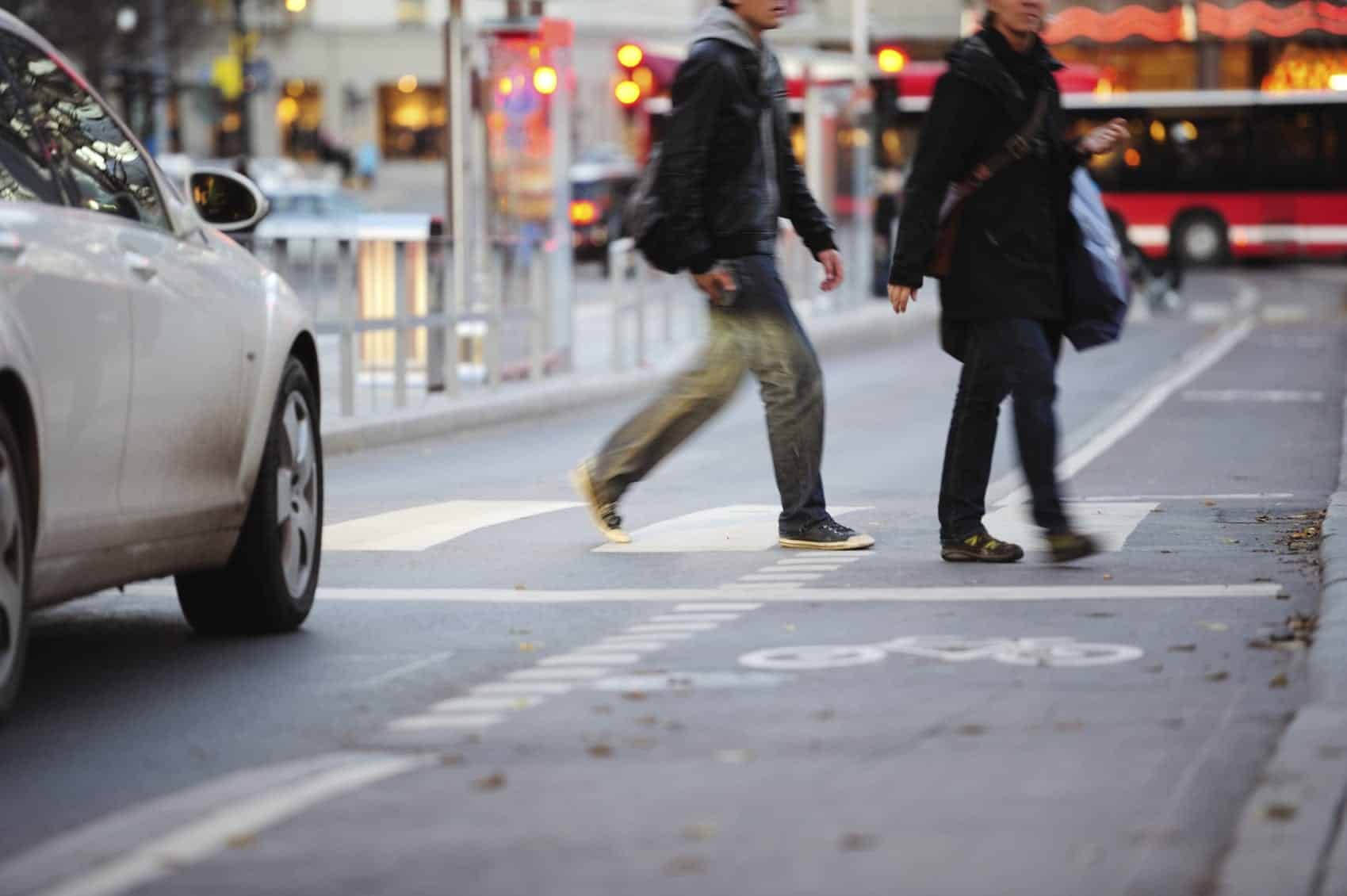

Can you file a claim if a car hits you while walking in Winston-Salem?
Yes: North Carolina is an at-fault state, so a pedestrian hurt by a careless driver can bring a claim against that driver’s insurer. The pedestrian’s own uninsured or underinsured motorist coverage may also add protection.
A Winston-Salem pedestrian accident claim usually turns on two questions: where you were when the car hit you, and how much insurance the driver has. North Carolina has specific rules for crosswalks, signals, and mid-block crossings, and an adjuster will compare your path against these rules before discussing payment.
Pedestrians don’t hold the right of way in every situation, and drivers owe a duty of care to people on foot, even when the pedestrian is outside a crosswalk. That duty often decides these cases.
If you were hit while walking, a Winston-Salem pedestrian accident lawyer can review your claim for free and explain how these rules apply to your situation.
Know Your Rights on Foot
- Drivers must yield to pedestrians in marked crosswalks and in unmarked crosswalks at intersections where traffic signals are not in place or not operating.
- A pedestrian crossing outside a crosswalk must yield to vehicles, but every driver still has a legal duty to use due care to avoid hitting a pedestrian.
- A driver who injured someone must stop and remain at the scene until police finish the investigation or allow the driver to leave.
- A pedestrian’s own Uninsured/Underinsured Motorist coverage may apply when the driver who caused the crash had no insurance or insufficient coverage.
Who Has the Right of Way When a Pedestrian Is Hit in North Carolina?
Determining who had the right of way depends on exactly where the pedestrian was and whether signals were working.
Here are the North Carolina rules that come up most often in Winston-Salem claims.
| The Pedestrian’s Location | Who Must Yield |
|---|---|
| Marked crosswalk, no working signal | The driver, slowing or stopping as needed |
| Unmarked crosswalk at an intersection, no working signal | The driver |
| Crossing on a WALK signal | All drivers |
| Starting to cross on a DON’T WALK signal | The pedestrian should not start crossing |
| Crossing mid-block, outside any crosswalk | The pedestrian |
| Sidewalk crossing a driveway or alley | The driver entering or leaving |
| Walking along a road with no sidewalk | The pedestrian should walk on the left facing traffic when practicable |
North Carolina’s crosswalk statute also bars a driver from passing a vehicle that has stopped at a crosswalk to let someone cross, a common cause of multi-lane crosswalk crashes.
The Driver’s Duty of Due Care
North Carolina requires every driver to exercise due care to avoid colliding with any pedestrian on any roadway, regardless of the other right-of-way rules. The same statute requires a driver to sound the horn when necessary.
A driver who was speeding, looking at a phone, or not watching the road can be held responsible even when the pedestrian was outside a crosswalk.
Extra Caution Around Children and Confused Pedestrians
The pedestrian crossing statute requires drivers to take proper precautions when they see a child or a confused or incapacitated person on the road. Children near schools, parks, and neighborhood streets don’t always behave predictably, and the law expects drivers to plan for that.
What Happens When a Pedestrian Gets Hit Outside a Crosswalk?

A pedestrian hit outside a crosswalk may face challenges recovering compensation because North Carolina generally requires pedestrians crossing mid-block to yield to vehicles. Between two intersections with working signals, pedestrians may cross only in a marked crosswalk.
Insurers often use these rules to argue that the pedestrian contributed to the crash, which can affect a Winston-Salem pedestrian injury claim.
Facts That Shape a Mid-Block Crossing Claim
The driver’s own conduct still matters when a pedestrian crosses outside a crosswalk, and several facts often shape how the claim is evaluated:
- How fast the driver was going compared with the posted limit
- Whether the driver was using a phone or otherwise distracted
- Street lighting, weather, and the pedestrian’s visibility
- The location of the nearest crosswalk
- How much time the driver had to see the pedestrian and react
These facts rarely appear in full on a crash report, which is why independent evidence matters so much in these cases.
What Is Contributory Negligence?
North Carolina’s contributory negligence rule can prevent you from recovering compensation if your own negligence contributed to the accident. If a jury finds that a pedestrian’s negligence helped cause the collision, the pedestrian generally can’t recover compensation. Contributory negligence doesn’t protect drivers whose conduct was willful or wanton.
Insurers often point to crossing outside a crosswalk as evidence of fault, making the location of the nearest crosswalk and the driver’s reaction time important.
However, crossing outside a crosswalk doesn’t automatically prevent you from recovering compensation. Drivers still have a duty to use reasonable care to avoid pedestrians. Under the last clear chance doctrine, you may still recover if the driver had a reasonable opportunity to avoid hitting you but failed to do so.
Where Does the Money Come From in a Winston-Salem Pedestrian Claim?
North Carolina uses an at-fault system, so a pedestrian’s claim usually starts with the liability insurance of the driver who caused the crash.
Other sources can matter as much, including:
- The at-fault driver’s bodily injury liability coverage
- Your own uninsured motorist coverage, if the driver had no insurance
- Your own Underinsured Motorist (UM) coverage, if the driver’s limits fall short of your losses
- Medical payments coverage on your own auto policy, if you carry it
- Health insurance, which may pay bills now and seek reimbursement later
You don’t need to be in a car for your own auto policy to matter. Whether a household policy covers you as a pedestrian depends on its definition of an insured.
When the Driver Was Impaired
A driver charged with impaired driving faces a criminal case that runs separately from your injury claim. The criminal case can produce evidence, such as test results and officer observations, that also supports the civil claim. Our article on pedestrians hit by drunk drivers covers the options specific to that situation in Winston-Salem.
When the Driver Drove Away
North Carolina’s duty-to-stop statute requires a driver who knows or reasonably should know a crash caused injury to stop and remain at the scene. When the driver flees and can’t be identified, UM coverage is often the main path to payment. Learn more about hit-and-run claims.
What Evidence Matters Most After a Pedestrian Accident?
Police reports, witness statements, video footage, and medical records can help establish fault and document injuries after a pedestrian accident.
In Winston-Salem pedestrian injury claims, important evidence often includes:
- Police reports from the Winston-Salem Police Department or other responding agencies
- Photos of crosswalks, traffic signals, and street lighting
- Statements from witnesses who saw the collision
- Video footage from nearby businesses, homes, traffic cameras, or buses
- The pedestrian’s shoes, clothing, and other items damaged in the crash
- Medical records, treatment costs, lost wages, and other accident-related expenses
Why Camera Footage Can’t Wait
Video is often the most persuasive evidence in a pedestrian claim and the most fragile. Many business and home systems record over older footage on a short cycle, sometimes within days.
A Winston-Salem pedestrian accident lawyer can leverage the legal system to help protect this crucial information.
Winston-Salem Pedestrian Accident Claims: Questions Answered by Our Attorneys
Can I bring a claim if a car hit me in a parking lot in Winston-Salem?
You can bring a pedestrian injury claim if a driver hits you in a Winston-Salem parking lot and their negligence caused your injuries. A driver’s duty to use reasonable care doesn’t end at the street, and North Carolina’s motor vehicle laws treat parking lots open to the public as public vehicular areas.
How long do you have to file a pedestrian injury lawsuit in North Carolina?
Most adults have three years from the date of a pedestrian accident to file a personal injury lawsuit in North Carolina. Most adults must file within three years of the injury. Insurance policies often require notice much sooner, especially for uninsured motorist claims after a hit-and-run.
What if the driver who hit me was working at the time?
If the driver who hit you was working at the time, their employer may also be responsible for your injuries. A commercial auto policy may also apply. Whether that happens depends on the driver’s job duties and the vehicle’s insurance, so identifying the employer early is helpful.
Does a child have more time to file a pedestrian accident claim?
Children injured in pedestrian accidents in North Carolina generally have until their 21st birthday to file a personal injury lawsuit. North Carolina’s three-year deadline for most injury lawsuits generally doesn’t begin running until an injured child turns 18.
Does the driver’s traffic ticket decide my pedestrian claim?
A driver’s traffic ticket doesn’t determine whether you can recover compensation after a pedestrian accident in North Carolina. A citation, or the lack of one, doesn’t decide a civil injury claim, although the officer’s investigation can point to useful evidence.
Talk With Our Winston-Salem Team Today

Recovering from getting hit by a car often means relearning ordinary routines, from crossing the street to getting to work. Lewis & Keller Injury Lawyers offers free case reviews to people hurt while walking in Winston-Salem and Greensboro. Our team handles injury cases on a contingency fee basis, which means you pay nothing unless we win.
When you’re ready, contact our team to discuss what happened and which coverage may apply.
