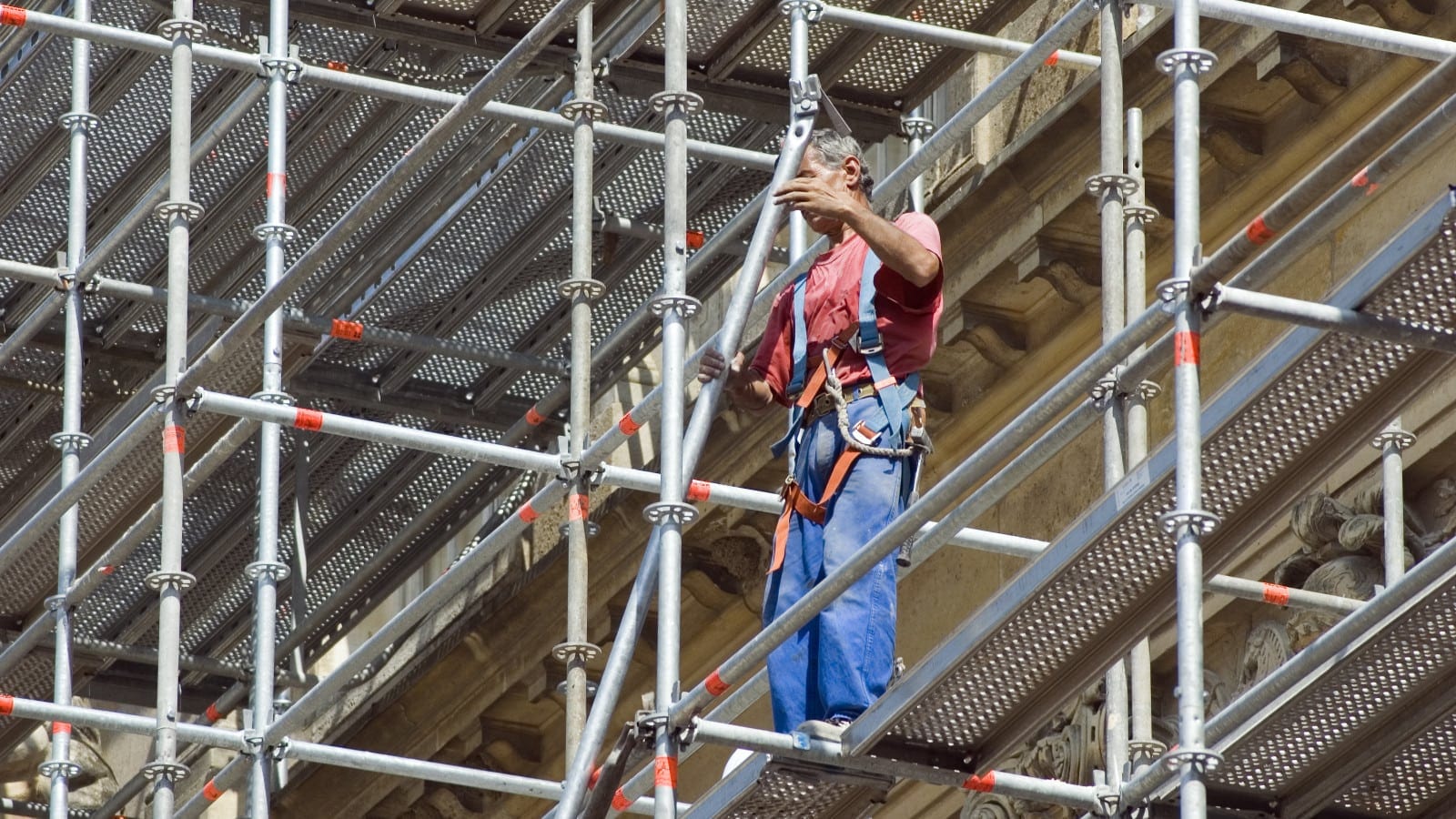
If you were injured in a scaffolding accident at work, understanding your legal rights is key. In most scaffolding accident cases, injured workers seek benefits through North Carolina’s workers’ compensation system. However, in some situations, a separate third-party personal injury claim—also called a third-party liability claim—may be available.
An experienced workers’ compensation lawyer can help you protect those rights and pursue the benefits you’re entitled to.
Construction workers spend much of their day around serious job-site hazards, including scaffolding. OSHA estimates that roughly 65% of construction workers use scaffolds at some point in their work.
Even when proper safety measures are in place, scaffolding accidents can still cause severe injuries. Falls, collapses, and falling materials can leave workers facing extensive medical treatment, time away from work, and long-term physical limitations.
Scaffolding-related incidents have led to serious injuries and fatalities across North Carolina in recent years, underscoring how devastating these accidents can be.
What Are Common Causes of Scaffolding Accidents?
Scaffolding accidents often happen because the equipment is improperly set up, poorly maintained, or used in unsafe conditions. Since multiple contractors and workers may be involved, it’s not always obvious who’s responsible when something goes wrong.
Some of the most common causes of scaffolding accidents include:
- Improper assembly or dismantling of scaffolding
- Missing or inadequate guardrails and fall protection
- Unsecured or defective planks and platforms
- Overloading scaffolding with too many workers, tools, or materials
- Use of damaged, worn, or defective scaffolding components
- Placement on unstable or uneven ground
- Poor training or lack of supervision on the job site
- Failure to follow OSHA or workplace safety standards
- Hazardous weather conditions, such as high winds or rain
Any of these issues can dramatically increase the risk of a serious fall or collapse, placing workers in immediate and often extreme danger.
What Types of Injuries Do Scaffolding Accidents Typically Cause?
Scaffolding accidents frequently result in serious injuries, including falls from height and being struck by falling materials. Even a short fall can cause long-term or permanent harm.
Common injuries seen in scaffolding accident cases include:
- Broken bones, including fractures to the arms, legs, ribs, or pelvis
- Head injuries and traumatic brain injuries (TBIs)
- Neck, back, and spinal cord injuries
- Internal injuries and organ damage
- Crushing injuries from collapsing scaffolds or falling equipment
- Cuts, lacerations, and severe bruising
- Permanent disability or loss of mobility
In severe cases, scaffolding accidents can be fatal. These injuries often require extensive medical treatment, time away from work, and ongoing rehabilitation.
Am I Eligible for Workers’ Compensation After a Scaffolding Accident in North Carolina?
Yes, if you were injured in a scaffolding accident while performing your job duties in North Carolina, you are likely eligible for workers’ compensation benefits. North Carolina’s workers’ compensation system is designed to provide benefits to employees injured on the job, regardless of who was at fault.
You are generally eligible for workers’ compensation if:
- You are classified as an employee (not an independent contractor).
- Your employer has three or more employees, which is the legal threshold in North Carolina.
- The injury occurred while you were performing work-related duties.
- You reported the injury to your employer promptly.
- You seek medical treatment and comply with workers’ compensation requirements.
Workers’ compensation benefits may cover:
- All necessary and reasonable medical treatment related to the injury
- A portion of lost wages if you are unable to work or are placed on work restrictions
- Temporary or permanent disability benefits, depending on the severity of the injury
It’s important to understand that workers’ compensation doesn’t require you to prove your employer was negligent. However, benefits can still be denied or delayed due to paperwork errors, missed deadlines, disputes over how the injury happened, or claims that the injury was pre-existing or not work-related.
What Steps Should I Take After a Scaffolding Accident?
If you are injured in a scaffolding accident at work, what you do next can have a major impact on your health and your ability to recover workers’ compensation benefits. Taking prompt and careful action is essential.
Key steps to take after a scaffolding accident include:
- Seek medical attention immediately, even if your injuries seem minor. Make sure the doctor knows your injuries are work-related. Be specific and consistent when describing your symptoms.
- Report the accident to your employer as soon as possible. Keep in mind that North Carolina workers’ compensation claims can be denied if notice is delayed. When reporting the accident, stick to the facts and avoid speculating about fault, including your own.
- Document the accident and your injuries if you’re able to do so. Take photos or videos of the scaffolding, equipment, and accident scene, photograph visible injuries, and get names and contact information of witnesses.
- Keep detailed records. This includes medical bills, treatment notes and prescriptions, accident reports, and communications with your employer or insurer. All of this information will be vital if you later apply for workers’ compensation.
- Follow your doctor’s treatment plan closely. Attend all appointments, follow all work restrictions and medical advice, and remember that any gaps in treatment can hurt your workers’ compensation claim.
Taking these steps can significantly improve your chances of receiving the full workers’ compensation benefits you are entitled to under North Carolina law.
Are There Safety Standards My Workplace Must Follow?
On a construction site, as in most workplaces across the country, safety standards are set by the Occupational Safety and Health Administration (OSHA). OSHA regulations apply to almost every area of a construction site, including the proper maintenance and operation of scaffolding. If a third-party claim becomes necessary, it’s important to examine these standards and decide if they were followed in the time leading up to your injury.
Scaffolding must be kept clear of tools and debris to allow for clear passage. Additionally, any scaffolding must be supported properly, avoiding loose materials such as barrels. Finally, scaffolding should have a weight capacity that supports four times the maximum intended load.
Evidence that OSHA safety standards were violated may strengthen a potential third-party liability claim.
Can I File a Third-Party Claim After a Scaffolding Accident?
In addition to workers’ compensation, you may be able to file a third-party liability claim depending on how the accident happened. While workers’ compensation generally prevents you from suing your employer, it does not bar claims against other negligent parties.
For example, a third-party claim may be possible if the scaffolding was defective, improperly designed, or negligently installed by someone outside your employer. Manufacturers, contractors, subcontractors, property owners, or equipment rental companies may be held liable if their actions contributed to the accident.
Third-party claims can allow injured workers to recover damages not available through workers’ compensation, such as pain and suffering and full lost wages.
What Must Be Proven in a Third-Party Scaffolding Claim?
After scaffolding accidents have occurred and you’ve suffered an injury, you will need to gather the evidence needed if you choose to file a third-party personal injury lawsuit.
In attempting to prove your case, there are three major areas that you and your attorney need to focus on.
These are the most likely to win you the compensation you need to recover from your injuries:
- First, you must identify the party whose negligence or safety violations contributed to the accident. This may include a contractor, subcontractor, equipment manufacturer, or other third party.
- Next, you must prove the damages that you’ve suffered. Types of damages resulting from scaffolding accidents can include bodily injury, lost wages, and mental suffering.
- Finally, you should consult with your attorney about what kind of evidence you should gather and how this evidence can be used in your case. Your attorney can help you recover most or even all of this, depending on the type of evidence it is.
How Can a Lawyer Help With My Scaffolding Accident Claim?
Scaffolding accident claims can be legally and factually complex, especially when multiple parties or serious injuries are involved. An experienced personal injury lawyer can help protect your rights at every stage of the process.
A lawyer can ensure your workers’ compensation claim is properly filed, deadlines are met, and required documentation is complete. If benefits are delayed or denied, your attorney can handle appeals and disputes on your behalf. Additionally, a lawyer can investigate whether a third-party claim is available and, if appropriate, pursue maximum compensation through a personal injury lawsuit.
By handling communication with insurance companies and opposing parties, a lawyer allows you to focus on recovery while working to secure the financial support you need. For injured workers in North Carolina, having legal guidance can make a meaningful difference in both the outcome of the claim and peace of mind during a difficult time.
Get Help with Scaffolding Accident Claims From a Work Injury Lawyer
Because scaffolding accidents can be so devastating, you deserve compensation to help you move on with your life, which is why you need assistance from experienced workplace injury attorneys.
When you work with the legal professionals at Lewis & Keller Injury Lawyers, you’ll be increasing your chances of winning your personal injury suit and ensuring that your case is handled correctly. To get started, schedule a consultation with us right away.